
Find and Compare Cheap Domestic and International Flights

Top Cities to Travel to in 2026
Book your dream flight easily with our top flight aggregator service




















Welcome to TICKETS!
Discover a seamless travel comparison platform at TICKETS. Easily compare flights, prices and options from multiple providers in one convenient place for your perfect journey.
About TICKETSFind Cheap Flights from Your Location
The cheapest flights from your location are automatically determined based on the most popular countries

Rome Fiumicino
Oct 2026
Nonstop
One Way
Trapani Birgi
Oct 2026
From
€15Rome Fiumicino
Oct 2026
Nonstop
One Way
Bari
Oct 2026
From
€15Rome Fiumicino
Oct 2026
Nonstop
One Way
Catania Fontanarossa
Oct 2026
From
€15Rome Fiumicino
Oct 2026
Nonstop
One Way
Brindisi
Oct 2026
From
€15Rome Fiumicino
Oct 2026
Nonstop
One Way
Palermo
Oct 2026
From
€15Rome Ciampino
Oct 2026
Nonstop
One Way
Cagliari
Oct 2026
From
€17
Rome Fiumicino
Oct 2026
Nonstop
One Way
Turin
Oct 2026
From
€19Rome Fiumicino
Oct 2026
Nonstop
One Way
Lamezia Terme
Oct 2026
From
€28Rome Fiumicino
Oct 2026
Nonstop
One Way
Lampedusa
Oct 2026
From
€29Rome Ciampino
Oct 2026
1+ Stops
One Way
Naples International
Oct 2026
From
€30Explore Top Destinations: Best Flights by Continent
Information for traveling across continents and countries with prices for the cheapest flights






Cheap Flights to Cities we Adore
Our unbeatable flight deals make your dream getaways more affordable than ever







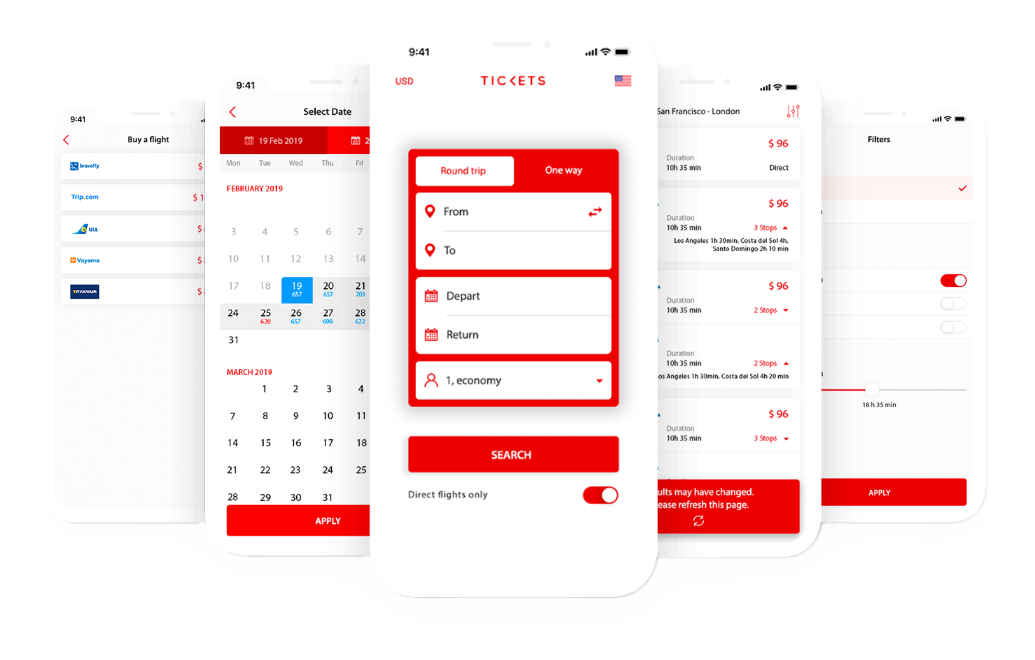
Compare flight prices on the go. The TICKETS iOS app searches 1,200+ airlines and booking sites in real time, so you find the cheapest fare anywhere — free, no signup, save trips and track flights.
Booking cheaper flights from Italy: what actually works
When should I start looking for a flight out of Italy?
For somewhere in Europe, start looking a month to two months out; for long-haul, think in months rather than weeks. Fares from Rome, Milan and Naples tend to find their floor somewhere in that stretch. What catches people out sits at either end of it. Book the same afternoon you decide to go, half a year before a short hop, and you are simply accepting whatever number the airline opened with — and an opening price is a forecast, not a favour. Leave it to the fortnight before departure and you are paying for whatever nobody else took. The useful middle is not a fixed count of days: it stretches and contracts with the calendar, and in Italy it contracts hard around Ferragosto, the spring ponti and the school holidays, when a large share of the country is trying to leave in the same fortnight. Rather than guess where it sits on your route, we read about a year of fare history for that specific route and say plainly whether to move or hold.
Does booking half a year ahead actually save anything?
No, and it's one of the most common misconceptions. Airlines open sales with fares set long before they know how a flight will fill, and that opening price is usually cautious rather than generous. Over the following months it moves in both directions: down when demand is soft, up as seats go. Booking six or eight months out therefore often just means accepting the first price you were offered without ever seeing anything better. The exception is periods when demand is certain and concentrated — August, the end-of-year holidays, the main ponti — where waiting rarely pays because seats genuinely run out. Outside those windows it's worth watching rather than acting immediately: set a free alert on the route and let a real drop tell you when to move.
Is flying mid-week really cheaper?
Generally, departing mid-week costs less than flying on a Sunday. Tuesdays and Wednesdays tend to be the quietest days, while Friday evening and Sunday are when weekend travellers and people heading home bunch together, and prices reflect it. Treat it as a starting point rather than a rule: on a heavily touristic route the cheapest day can shift, and on a low-frequency link availability matters more than the weekday. The return day carries as much weight as the outbound one, and it's the half people usually overlook. That's why we show a full month of prices side by side instead of asking you to guess — you can see straight away which days are cheaper on your route, including outbound-return pairings you'd never have thought to test.
Why does your round trip sometimes undercut the airline's own price?
Because we don't only look for the return ticket airlines publish. Behind every search we also price the outbound and the return as two separate one-way flights, compare them across different carriers, and then pair the two cheapest legs into a single itinerary. When that combination costs less than a conventional return we show it and tell you what you're saving; when it doesn't, it never appears at all. The result is especially common across Europe, where different airlines fly the same route in each direction with independent pricing. One thing to know: two legs bought separately remain two separate contracts, so if the first falls through the second doesn't adjust itself. We flag that, so you choose knowing what you're buying.
When do two separate one-ways work out better?
More often than most people expect, and it's exactly the case we look for automatically. Airlines price by direction, not by trip, so there's no reason the cheapest return leg should belong to the same carrier as the outbound. On European routes served by several airlines the gap between the best pairing and the published round trip can be substantial. The trade-off is liability: with two separate tickets, a delay on the first leg obliges nobody to rebook you on the second, and change conditions apply to each ticket on its own. If you're travelling on thin margins or have fixed commitments at the other end, that difference matters more than a few euros. We show both options with the saving stated plainly, so the choice stays yours and informed.
How much does shifting my dates change things?
Usually more than any other single adjustment, including picking the perfect weekday, because flexibility stacks across two different planes. Moving your departure by a few days acts on demand for that particular date; moving the trip by a few weeks acts on the season. In Italy the second effect is pronounced: around Ferragosto departures concentrate into a handful of days and fares climb accordingly, while by late September the same route reads completely differently. The spring ponti and the 8 December bridge create shorter but clearly recognisable peaks too. That's why we open a whole month of prices at a glance — instead of asking whether a date is good, we show you the shape of the route, where the expensive days sit and where the cheap ones are.
Does leaving from Milan instead of Rome make a difference?
Often, yes — the major Italian cities have more than one field and low-cost carriers tend to concentrate on the secondary ones. Rome splits between Fiumicino and Ciampino, Milan between Malpensa, Linate and Bergamo Orio al Serio, and the same route can cost noticeably different amounts depending on where you start. Do the whole calculation, though: a cheaper flight leaving at dawn from a distant field can lose its advantage to train fares, parking or an overnight stay, and the same applies at the other end, where a secondary airport may sit well outside the city. We let you widen a search to nearby airports so you see the alternatives side by side, with times and duration next to the price.
Self-transfer: what do I need to check first?
A self-transfer itinerary joins two flights that aren't part of the same booking, often on different airlines, and it can undercut a connection sold as one ticket by a wide margin. The critical point is that neither airline answers for the other: if the first leg is delayed and you miss the second, the second carrier isn't obliged to rebook you and the ticket can simply be lost. Check three things before booking. How much real time you have between flights, allowing for collecting and re-checking bags and passing controls again. Whether the transfer involves changing airport, which in cities like Rome or Milan changes the timings entirely. And whether there's a later flight that day on the second leg, because that's your fallback. When we show an option like this, we label it for what it is.
Should I bother setting a price alert?
Yes, particularly if you have any room on dates. An alert doesn't push fares down, but it removes the practical burden of checking them by hand every day: you set a route and a period, and we message you when the price moves, so a genuine drop reaches you even while you're thinking about something else. It helps in two typical situations. When you've settled on a destination but not an exact date and want to learn where the route sits before committing. And when you're weighing several destinations at once and would rather let the best fare choose the trip. Alerts are free and you can set more than one. The less obvious benefit is discipline: waiting becomes a decision with an end point, rather than drift that lasts until prices have already risen.
Book now or wait — how do I tell?
The difficulty is that a fare on its own doesn't tell you whether it's good — you need a reference. So we read roughly twelve months of history for the route and return an explicit signal: buy, wait, or neutral, alongside a confidence level, the months that are typically cheapest and dearest, and the recent trend. That tells you whether the price in front of you is genuinely strong for that route or merely ordinary. On top of that, one simple rule still holds. If your dates are fixed and departure is close, book — fares climb fastest in the final stretch and waiting rarely repays. If you have room and the signal says wait, set an alert and let the drop find you, rather than checking daily and deciding on instinct.
TICKETS costs me nothing, so who pays you?
We're paid a commission by the airline or travel agent when you book through us, and that's the only way the service earns. We add no markup to the fare you see: the price shown is the one the seller publishes, and when you're ready we send you to them to pay it. We don't charge you to search, to compare, or to set alerts. That has a consequence we think is worth stating plainly: we have no reason to hide the cheapest option from you, because our interest is that you find a flight you're happy with and come back next time, not that you overpay today. For the same reason we sort results by real value and tell you when it's worth waiting, even when waiting means you book nothing at all today.
Which time of year is cheapest to fly from Italy?
The cheaper stretches are normally low season — roughly January and February once Epiphany has passed, and then the window from late September through October, when summer demand has drained away but routes are still well served. The dearest are summer, with the very sharp August and Ferragosto peak when much of the country is on holiday at the same time, and the end-of-year holidays. Easter and the spring ponti create shorter but still recognisable rises, as do links to Sicily and Sardinia at the height of summer. These are general tendencies rather than guarantees: they shift by route, by destination and by hemisphere, and a counter-seasonal destination can invert the picture entirely. That's why we show the history for the specific route alongside guidance like this.